Message From the Dean
THIS INAUGURAL ISSUE of The Diamond marks our transition to a fully digital format, accessible online from anywhere in the world. Moving away from print not only reduces production costs but also lessens the environmental impact of paper magazines that are often discarded after a short time. An active and frequently updated ezine, our new Diamond allows alumni and readers to explore and celebrate the many achievements of Temple University Maurice H. Kornberg School of Dentistry.
We begin with a look at the future of dental education—what’s needed and what we can do.
First, despite challenges such as rising costs and faculty shortages, dentistry remains a highly desirable career path—one that outperforms other professions in terms of quality of life, work-life balance, and potential financial independence. Today’s new graduates are earning solid incomes that allow them to support their families and build careers with significant opportunities for growth.
We are, however, at a pivotal turning point. Dental education no longer emphasizes the pursuit of clinical excellence as strongly as it once did. Instead, many programs have shifted toward asking students to meet only the minimum graduation requirements.
This decline in clinical preparedness as well as rising tuition costs are pushing new dentists toward employment with large corporate practices that can offer the clinical mentoring and loan repayment needed. If this trend continues, the profession risks becoming increasingly shaped by the priorities of venture capitalists whose primary focus is financial return.
Foundation of ethical, critical thinking
Now more than ever, dental education must return to focusing on graduating highly competent dentists equipped with advanced skills in treatment planning, patient communication, and ethical decision making. The dentist’s ethical critical thinking—doing the right thing for the right patient, every time—should be the core foundation for dental education and practice.
The framework for this thinking must be woven into every aspect of the curriculum and considered in every patient interaction. Developing these competencies is challenging but essential for the integrity and sustainability of the dental profession.
Also, dental leaders and organized dentistry must work collaboratively to transform the dental schools’ clinics from mere training environments into true centers of patient care. Patient-centered care—not an exhaustive list of procedures—should be the guiding principle for accreditation and clinical education.
Additionally, we must reassess the financial structures and reimbursement models within dental schools. We cannot continue to operate clinics like “sandboxes” for student practice without regard for comprehensive patient care and fiscal responsibility.
At Temple University, we take this responsibility seriously. Our clinics operate with financial accountability, generating revenue that supports our students and school. In this way, we are ensuring that clinical education remains patient focused and economically sustainable.
To continue to build the future we envision, we have adopted the necessary principles of education and practice. Our clinics are modern and fully equipped, our faculty are dedicated to delivering exemplary patient-centered instruction, and our operations are built around the needs of the patient. We are also integrating digital technologies and artificial intelligence into our clinical environment, so our students are prepared to lead in an evolving profession.
The future of dentistry is in our hands. It is our responsibility to guide the forces of change while preserving the profession’s core ethical values. We must adopt innovative models that strengthen private practice. We must particularly support those built around networks operating as a professional enterprise committed to advanced, appropriate, and patient-centered care.
This vision can only be achieved by reforming dental education, accreditation standards, and operational models in both dental schools and dental practices. The stories featured in this inaugural digital issue demonstrate our capacity to transform—and to reaffirm Temple University’s leadership in shaping the future of our profession.
Be proud of your school.
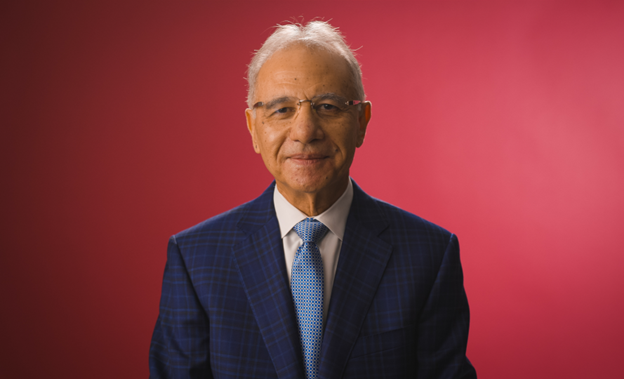
Amid Ismail, BDS, MPH, DrPH, MPH, ABDPH, FACD
Dean and Laura H. Carnell Professor