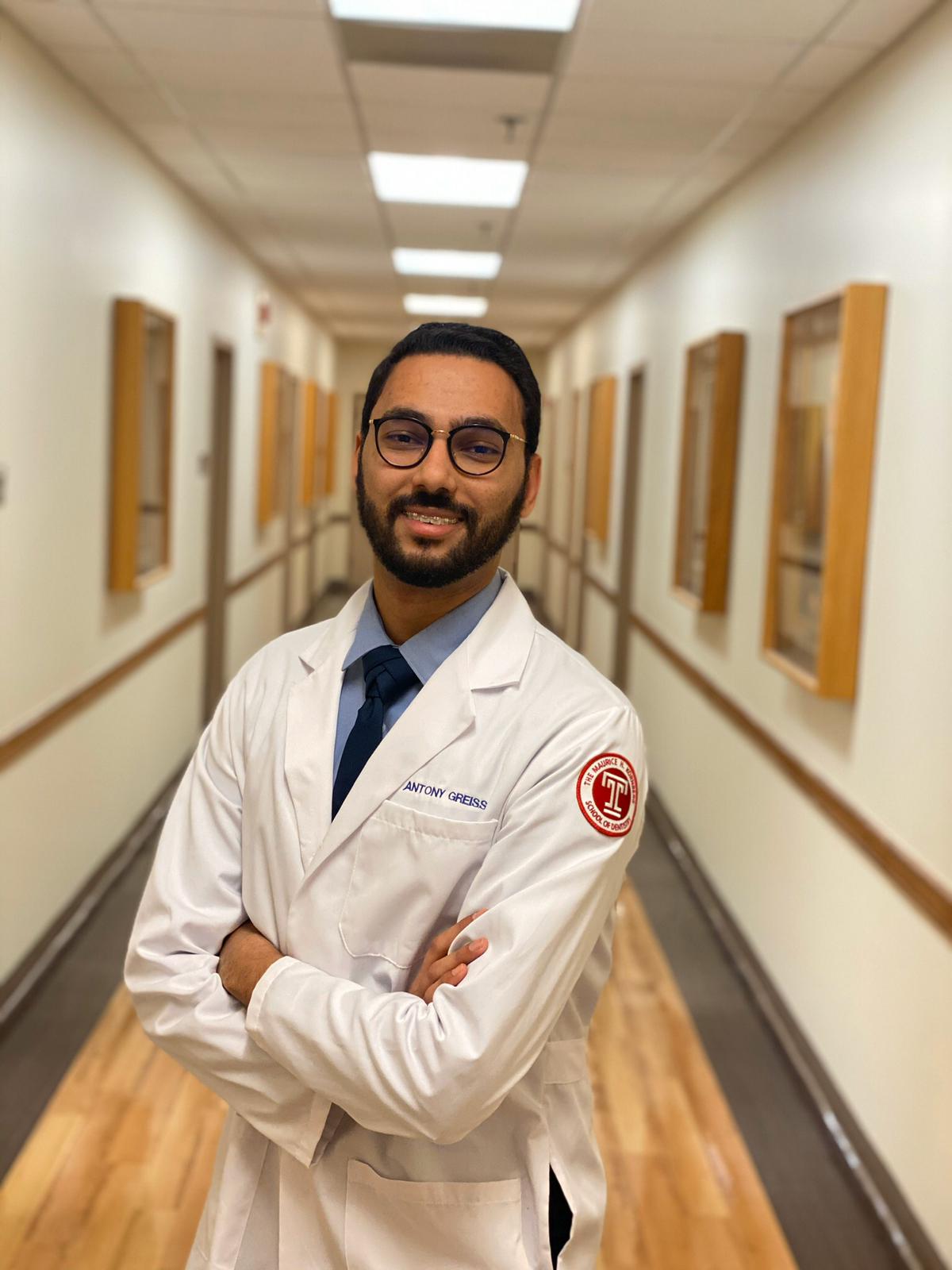
AN MBA AND A DMD: In Dr. Antony Greiss’s mind, they’re system and art. They’re how he turned an aspiration into a plan he could execute. They’re science and hands-on skill combined with how to build a practice where great care is repeatable.
Greiss says his MBA taught him about sustainable operations as measured by retention, informed case acceptance, reviews, and community trust. “You need to understand the numbers,” he explains. “Especially if you’re starting a practice, you have loans, you’re buying equipment, and you’re figuring things out. It’s not easy. With a business perspective, you’re able to understand cash flow, where you can start making some investments, and where you can push to get the practice to grow.”
Beyond the numbers, Greiss knew his MBA would also emphasize human resources. “That’s what I was going to be doing the most: hiring and firing plus finding a good team that could click together. My goal was to put together a team who would stay with me for next 10 to 15 years.”
A rule of ethics
To earn his MBA from the University of Texas at Tyler, where he had relocated with his family in 2013, he used a gap year. Then, looking farther afield for a dental school that “offered the combination I wanted,” he chose Temple Dental. Part of that combination was a diverse patient population and a high-volume clinical experience. But, importantly, another part was mentors who modeled words to live by: “Our ethics show when no one is watching.”
Two faculty prosthodontists, Dr. Hancock and Dr. Khalili, especially emphasized that ethic for Greiss. “They were very picky,” he notes. “Their rule was, ‘If there’s something we don’t like, we’re not delivering it in the patient’s mouth.’”
And the rule has stuck with Greiss.
He points to a recent “redo moment” after a root canal. “I reviewed the postoperative image and noticed one canal fill was short,” he says. “So I explained it to the patient, apologized, and asked if he had time for me to correct it immediately. He did, and we fixed it on the spot. That day reinforced for me that you do the right thing before you’re asked, and you do it visibly.”
The patient experience
What other lessons did Greiss learn while at Temple Dental? He mentions that working in North Philadelphia convinced him dentistry is a public service. Also, in clinic he understood that teamwork is a necessity. In addition, he recognized that patients feel ownership when options are plainly presented.
In fact, today, the patient experience is a top priority for Greiss in his practice. “Technology matters,” he says. “But outcomes improve when patients feel known, not managed. Here, we remember patients’ trips, their kids’ names, and small life updates. They’re cared for as people, not charts. We have found that a consistent patient experience comes from daily huddles, clean handoffs, photo-aided case presentation, and post-op follow-through.
That human side of dentistry showed up for Greiss even before he started his own practice. Two years ago, he was an associate in another office, and he still is in contact with a few patients and two assistants from there. “I really cherish the relationships that develop with my team,” he says.
Importance of a smile
Greiss always wanted to be a dentist. While growing up in Cairo, Egypt, he saw many people who were shy to smile. “You could help them in a dozen ways,” he says, “but if they couldn’t smile, something inside stayed dim. I chose dentistry because it’s the crossover of service and transformation.”
He continues: “I have seen my dad help people financially. Because he’s a lawyer, he handles some cases pro bono. But if those people don’t have teeth, they still are not truly happy. They lose the beauty of life because they’re not interacting with people. So now I can help them. I can give them back the ability to smile.”